
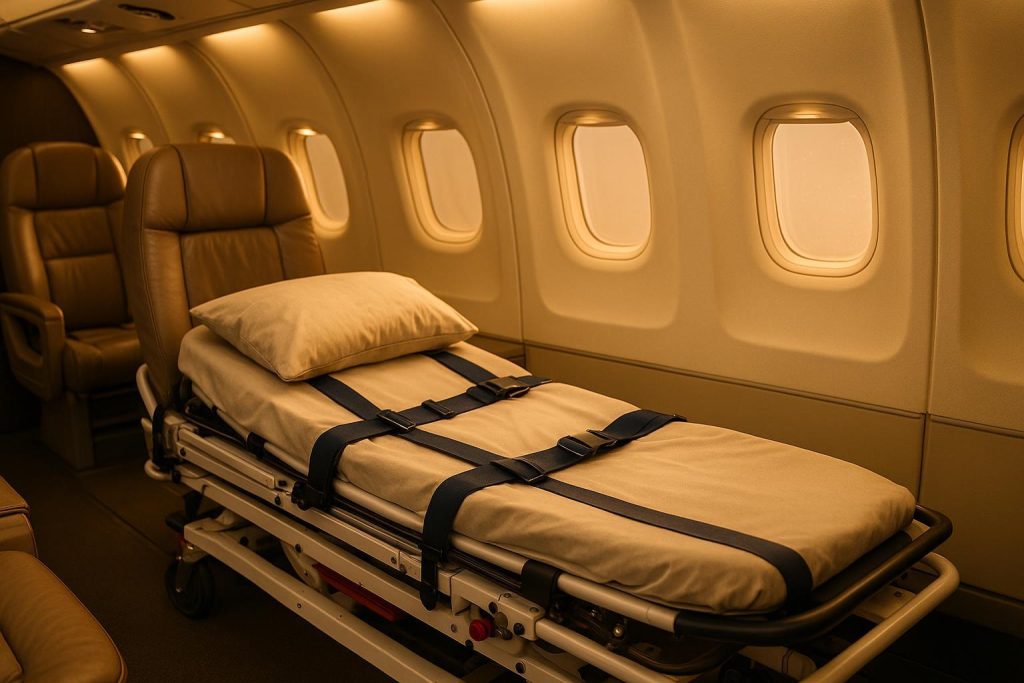
Understanding Commercial Airline Stretcher Arrangements for Patients
Traveling by air can be a demanding experience under the best of circumstances, but when a patient requires a stretcher on a commercial airline, the logistical and medical considerations become even more intricate. In many cases, arranging for an air ambulance may simply be too expensive or impractical for patients who are stable enough to travel on a regular flight. A well-coordinated commercial airline stretcher service can bridge that gap. Below, we take a comprehensive look at how the process works, why it is used, and what families and case managers should expect when organizing recumbent air travel for individuals with complex medical needs.
Why Consider a Commercial Airline Stretcher?
A commercial airline stretcher offers a middle-ground option for non-emergency medical transport. Instead of incurring the cost of a dedicated air ambulance, patients can travel on standard scheduled flights where a section of the cabin is adapted to support a stretcher. Although not every airline or flight path supports this configuration, many major carriers and international routes can accommodate stretchers if given adequate notice and the patient meets medical guidelines. This approach is particularly helpful for:
- Patients who are stable but cannot sit upright for the entire duration of the flight.
- Individuals with injuries requiring them to lie flat during travel.
- Patients requiring a more cost-effective solution than a private air ambulance.
- Situations where time is flexible, and families can plan around airline schedules.
By adapting part of the aircraft, the patient can remain in a recumbent position with the necessary medical equipment and privacy curtains. It is generally less expensive than a one-to-one air ambulance charter, yet sufficiently specialized to maintain proper care en route.
Preliminary Steps and Medical Clearance
Before booking a stretcher on a commercial airline, it is crucial to confirm that the patient’s condition allows for this type of transport. Typically, the first points to consider are:
- Comprehensive medical assessment: The patient’s current state, stability, and the potential risks associated with flying must be studied. Oxygen requirements, IV therapy, pain management, and infection control are among the variables that need to be discussed with qualified medical professionals.
- Formal airline clearance: Airlines require a “fit-to-fly” certificate or other medical documentation from a physician or certified medical professional. This documentation indicates that the patient is stable enough to fly and identifies any in-flight requirements, such as oxygen supply, specialized monitoring, or mobility assistance.
- Coordination with the airline’s medical department: Once the physician or hospital has provided the necessary documentation, the airline’s medical department must be consulted. They review the details and either approve or deny the request based on the airline’s policies, the flight duration, and the patient’s medical condition.
This crucial preparation ensures that everyone involved is aware of the patient’s special needs, minimizing unexpected complications that could arise mid-flight.
The Configuration and Equipment
When an airline agrees to install a stretcher, seats in the designated area (often near the rear of the plane) are removed. In their place, a stretcher kit is installed. The area is usually curtained off to provide some degree of privacy for the patient. Medical escorts, such as flight nurses or paramedics, often accompany the traveler to monitor their vital signs, administer medication, and address any unforeseen medical issues.
Commonly provided or recommended medical equipment for a commercial stretcher flight includes:
- Oxygen supply, if needed, for respiratory support.
- Special monitoring devices (e.g., heart rate and blood pressure monitors).
- Medications and IV fluids in sealed packages.
- Basic medical consumables (bandages, syringes, catheters, etc.).
While commercial airlines try to accommodate as much equipment as possible, the selection is typically less comprehensive than on a dedicated air ambulance. For patients needing only moderate medical supervision, the level of care on a commercial flight is often sufficient.
Duration, Costs, and Planning
Arranging a commercial airline stretcher can take more time than a standard flight booking because the airline must reconfigure the interior of the aircraft. Families or case managers should plan well in advance—ideally, at least a few weeks—to secure all approvals. Costs also vary based on :
- Airline policies and fees: Some airlines apply a flat fee, others require the purchase of multiple seats to accommodate the stretcher. Taxes, additional baggage fees in the medical area, or special surcharges can be applied as well.
- Flight distance and route: Longer or more complex routes can increase the overall cost. If multiple connecting flights are needed, complexity increases, as does the total price.
- Medical escort services: If the patient requires a skilled healthcare professional en route, their fee must be added to the overall budget. They often require their own seat and might also need lodging if the itinerary includes layovers.
Insurance coverage might offset some or all of these expenses, depending on the policy and the patient’s condition. If you suspect coverage might apply, it is a good idea to coordinate with the insurance company or the hospital’s social work team at the earliest possible stage.
Expert Support and Coordination
Families and healthcare professionals may find the administrative task of scheduling medical escorts, securing airline approvals, and overseeing the patient’s safety to be overwhelming. That is why many opt for a specialized service provider skilled in organizing medical transports of every kind. From obtaining airline clearance to ensuring a streamlined journey, an expert team can handle the details so patients and families can focus on recovery and well-being.
For example, at Jet Companion, we offer a Commercial Airline Stretcher service that handles the entire collaboration process with the airline, medical providers, and relevant travel authorities. Our approach includes:
- Complete pre-flight medical evaluations.
- Flight booking and special seating arrangements.
- Coordination with in-flight medical escorts.
- Support with post-arrival transfer and hospital coordination.
This holistic coordination eases the logistical burden on families and ensures patient safety remains uncompromised. Another advantage is the streamlined nature of the process—rather than dealing with multiple agencies, families and hospital professionals can rely on a dedicated point of contact that manages all the moving parts.
Commercial Airline Stretcher vs. Air Ambulance
Air ambulances are fully equipped, private aircraft specifically designed for handling urgent or severe medical conditions. They often have advanced life-support capabilities, a highly specialized medical crew, and far greater scheduling flexibility compared to commercial airline flights. However, air ambulances can be quite expensive and are typically reserved for patients in critical condition who cannot wait for a commercial service to be arranged.
By contrast, a commercial airline stretcher is an optimal choice if:
- The patient can medically wait for flight availability.
- The cost of a private plane is prohibitive.
- A moderate level of in-flight care is sufficient for the patient’s needs.
This cost-effective alternative ensures that those who are stable—yet require specialized monitoring and the ability to lie down—have an avenue to travel safely without incurring the heavy expenses associated with private charters.
The Role of Medical Escorts
A key element of commercial airline stretcher travel is the presence of medical escorts, such as flight nurses, paramedics, or physicians. For patients with pre-existing conditions that demand active monitoring, an escort is essential. These professionals are trained to manage medical needs during flight, handle potential complications, and maintain consistent communication with the flight crew and ground support. If the patient has mental health considerations, specialized Mental Health Travel Support can also be arranged with escorts experienced in addressing anxiety, PTSD, or other psychiatric conditions in transit.
In many scenarios, a Commercial Medical Escort might be enough if the patient is able to sit upright for most of the journey, though some still need recumbent support. Either way, having a trained professional present provides peace of mind for family members waiting at the destination.
Coordination After Landing: Continuing Care
Once the plane touches down, the next step is ensuring a safe and efficient transfer from the airport to the receiving medical facility or home. Many providers extend their coordination services to ground transportation as well, ensuring a smooth continuum of care from “bed to bed.” If the patient requires specialized hospitalization, the liaison typically arranges ground ambulance or a specially equipped vehicle to transfer them to the next stage of care.
Proper post-flight coordination also involves:
- Sharing medical updates with the receiving healthcare team.
- Finalizing insurance or hospital admission requirements.
- Ensuring relatives or case managers are informed about the patient’s condition and arrival time.
This step completes the medical travel cycle, reducing additional burdens on families who may already be coping with the emotional and logistical challenges of a patient’s health condition.
Ensuring a Successful Journey
Organizing a commercial airline stretcher for a patient is a multi-faceted process that demands attention to both clinical and administrative details. Here are some final considerations for a successful experience:
- Plan well in advance: Airlines often require several days or even weeks to review and confirm the booking, especially for international flights.
- Communicate precisely: Make sure to provide thorough information about the patient’s condition, required equipment, and potential complications when speaking with the airline or a medical transport provider. Over-communication is often better than under-communication.
- Budget realistically: Include the cost of the stretcher configuration, additional seats if needed, any medical escort fees, lodging for escorts, and ground transport in your financial planning.
- Secure the needed documentation: Fit-to-fly forms, physician’s letters, and potentially copies of medical records can help streamline the airline’s clearance process.
- Prepare for flight day: Ensure the patient’s family and healthcare team have a plan for ground transport to and from the airport, as well as an arrival strategy at the destination. Charges for unexpected changes can be high if not pre-arranged.
Above all, the comfort and health of the patient remain the top priorities. If at any point the patient’s condition worsens, additional medical interventions or alternative travel options—such as Medical Repatriation services—may be required.
Working With an Experienced Team
Coordinating commercial stretcher travel can be eased by engaging experienced providers capable of guiding families or healthcare professionals from start to finish. At Jet Companion, we see medical transport as a partnership among professionals, families, and patients, with everyone working toward a shared goal: safe, dignified travel and restful arrival. Our Case Management approach includes powerful communication lines, proactive problem-solving, and personalized care considerations. Whether you’re a family member or a hospital case manager, these services can help navigate the complexities and keep stress levels to a minimum.
If you need compassionate and professional medical transport or more information about recumbent travel on commercial airlines, please contact us. Our team offers transparent guidance and direct support through every step, from first inquiry to safe arrival. By focusing on human needs rather than just logistics, we ensure that medical travel remains an experience of genuine care.
For additional details on our stretcher arrangements and the benefits they offer, you can visit our dedicated Commercial Airline Stretcher page. Our clients’ well-being is our foremost concern, so you can feel assured that every flight is approached with expertise, warmth, and the highest standard of safety.