
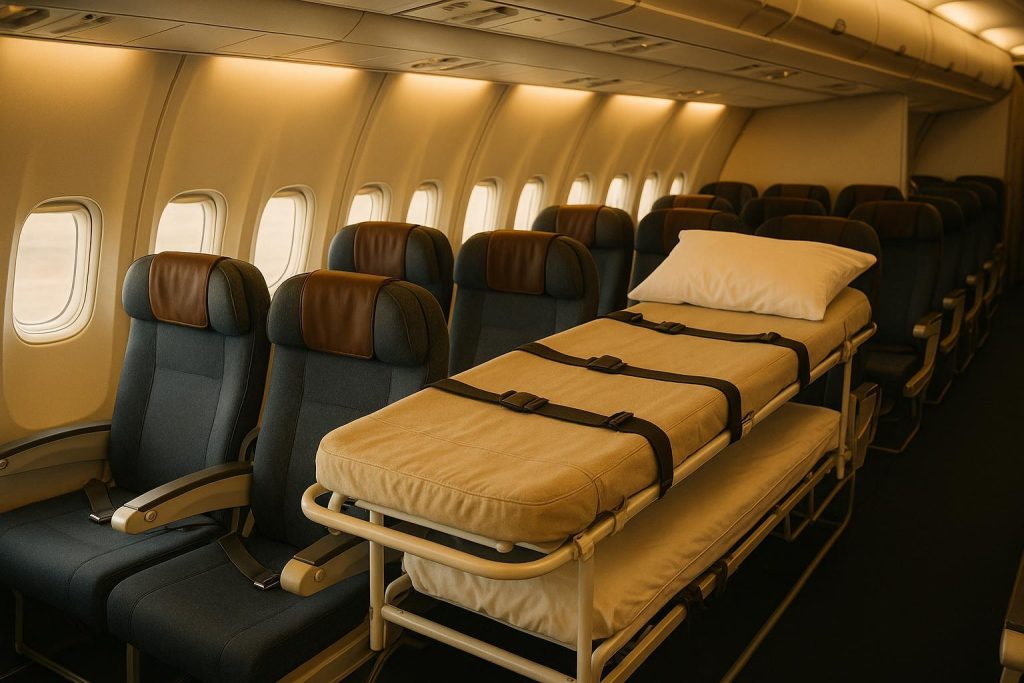
Traveling on a Commercial Flight While Needing a Stretcher
When someone requires a stretcher for air travel, it introduces a unique set of considerations and complexities that go well beyond booking an airline seat. Although many assume the only option is an air ambulance, it is sometimes possible for a patient to travel on a commercial flight if specific requirements can be met. This approach—commonly referred to as a commercial airline stretcher arrangement—provides a more cost-effective alternative for those who need to remain lying down but do not necessarily require the extensive resources of a dedicated air ambulance.
Why Patients May Need a Stretcher
Patients may need to remain lying down during air travel for various medical reasons. Whether it’s a recent surgery, a severe injury requiring minimal movement, or chronic conditions that make sitting upright for long periods impossible, being horizontal ensures comfort and safety during the flight. Stretcher accommodations can be particularly important for:
- Post-operative patients recovering from major surgeries, especially orthopedic procedures.
- Individuals with injuries to the spine, hips, or lower limbs that restrict sitting.
- Patients suffering from debilitating illnesses who cannot be upright without risk.
- Passengers experiencing mobility issues that make standard seating arrangements impractical.
Ultimately, the decision to use a stretcher on a commercial flight is always a collaborative effort between healthcare professionals, the airline, and the patient’s family. Determining whether it is both safe and feasible depends on a thorough medical assessment of the patient’s condition and travel requirements.
Understanding Commercial Airline Stretcher Services
In a typical commercial flight, space is tailored for seated passengers. When a stretcher is necessary, airlines often rearrange or block off rows of seats to allow a specialized cot-like structure. These modifications are not available on all aircraft. Instead, only specific airline partners and flight routes accommodate this type of configuration. The key differences between a commercial airline stretcher and a standard flight setup include:
- Spacious Layout: A portion of the cabin is curtained off or dedicated to house the stretcher and maintain patient privacy.
- Essential Equipment: Medical monitors, oxygen supplies, and additional items might be arranged beforehand to address the patient’s in-flight medical needs.
- Medical Clearance: The airline requires complete documentation from a physician, along with a review by the airline’s medical department, to confirm the patient’s fitness to fly with a stretcher.
If a patient is stable enough to fly commercially yet needs to remain lying down, a Commercial Airline Stretcher service may offer the right balance between comfort and cost savings. This approach can significantly reduce the financial burden compared to chartering an entire air ambulance, as costs are generally limited to the fare of the reconfigured seats, plus the professional services required to ensure a safe journey.
The Importance of Medical Repatriation Expertise
When long-distance or international travel is needed, managing all the details by oneself can be daunting. People often believe the process is as simple as calling the airline and submitting a doctor’s note. However, Medical Repatriation or returning home from abroad can involve specific logistical plans, language barriers, and compliance with different regulations. This is where working with a specialized service can streamline and simplify matters.
Professionals well-versed in medical repatriation handle key tasks such as:
- Liaising with Airlines: Booking a stretcher involves complex documentation, seat reconfiguration, and coordination with medical departments.
- Arranging Ground Transportation: From the hospital or rehabilitation facility to the airport, ground ambulances or wheelchair-accessible vans are often needed.
- In-Flight Medical Monitoring: A medical escort or nurse may be required if the patient needs continuous supervision, monitoring of vital signs, or assistance with medication during the flight.
- Post-Flight Arrangements: After landing, patient care must continue, often calling for ground transport to the final healthcare facility or home.
Having experts who understand each facet of the journey alleviates stress and ensures safety. Moreover, an experienced provider helps manage unforeseen challenges, like flight schedule changes or last-minute health concerns, without leaving the family scrambling.
Medical Escorts: Added Support for Patients
In many instances, a patient traveling on a stretcher will require professional oversight. This is where Commercial Medical Escort services are instrumental. A medical escort, typically a registered nurse or paramedic, can oversee the patient’s needs throughout the journey. Their responsibilities often include:
- Administering medications or IV fluids during the flight.
- Monitoring vital signs to ensure stability.
- Providing oxygen support if required.
- Maintaining patient comfort and managing any complications en route.
Working with a medical escort reduces the risks linked to unforeseen changes in the patient’s condition, especially when higher-level care might be required swiftly. Having a trained professional on board provides confidence that any emerging medical issues can be addressed quickly and appropriately.
How to Determine If Stretcher Travel Is Feasible
Not every patient is suited for a commercial airline stretcher. Sometimes, an air ambulance is the more appropriate solution. However, if a physician determines that the patient is stable enough, the following factors help confirm if stretcher travel is viable:
- Medical Stability: The airline will review the patient’s medical history and current medical assessment to decide if flying with a stretcher is safe.
- Availability of Flight Routes: Only certain aircraft can accommodate stretchers. Flight times, number of layovers, and the final destination play a significant role in logistics.
- Cost and Insurance Coverage: While commercial airline stretcher travel is typically cheaper than a specialized air ambulance, expenses like seat blocking fees, medical escort fees, and ground transportation should be considered.
- Travel Time: Flights involving multiple connections might not be ideal for some patients. Minimizing layovers or ensuring adequate ground support is crucial.
A thorough conversation with the patient’s healthcare provider can help gauge “fitness to fly,” and medical repatriation professionals can analyze route particulars to confirm whether a commercial flight option is appropriate.
Case Management for Complex Journeys
Bringing together the many pieces needed for a successful stretcher transport demands reliable coordination. A Case Management approach helps ensure no details are overlooked along the way. From handling medical clearances and scheduling ambulance transfers to facilitating communication among all involved parties, case managers act as the vital link tying everything together.
Expert case managers focus on:
- Customizing Plans: Every patient is unique. By crafting individualized transport plans, case managers factor in medical conditions, logistics, and family preferences.
- Coordinating Among Stakeholders: Collaboration with airline representatives, hospital teams, and ground transport providers helps ensure synchronicity.
- Facilitating Seamless Communication: Clear guidelines, accurate documentation, and open lines of contact ensure everyone stays informed.
Case management offers peace of mind to families and guarantees that evolving needs do not derail the travel plan. In situations where mental health or emotional well-being are significant concerns, specialized assistance can be requested to address those distinct requirements as well.
Mental Health Considerations
Traveling with a stretcher is not always restricted to physical ailments. In scenarios where mental health plays a role, added protocols or support structures may be necessary—especially if traveling presents a unique stressor. Professional services focusing on Mental Health Travel cater to individuals coping with anxiety, PTSD, or other mental health challenges. Even if a patient’s primary reason for using a stretcher is physical, it is essential to account for psychological support, ensuring a calm and respectful travel experience.
Preparing for the Journey
The process of traveling on a commercial flight with a stretcher often begins weeks in advance. Below are a few tips to ensure you’re as prepared as possible:
- Gather Medical Documentation: Obtain comprehensive health records, including a recent medical assessment, test results, and any applicable discharge papers. These documents help the airline’s medical team understand the patient’s current status.
- Consult Your Physician: Confirm with your healthcare provider that commercial travel is safe. The physician may have specific suggestions regarding medications, potential complications, or precautions to take.
- Coordinate with Experts Early: Often, families contact a medical transport provider to help with planning, especially if the patient is located abroad. Early coordination ensures enough time to secure required approvals and arrange flight segments.
- Check Passports and Visas: For international trips, verify that all travel documents for the patient and accompanying individuals are up to date. Delays in paperwork can derail an otherwise well-planned schedule.
- Pack Medications Carefully: Medications (and backups) should be organized, clearly labeled, and easily accessible to the medical escort during the flight.
- Monitor Changing Conditions: Patient health can improve or worsen. Stay in close contact with the medical team for any last-minute adjustments that might be required.
Would a Dedicated Air Ambulance Be Better?
While a commercial airline stretcher is suitable for many, those with severe or unpredictable medical conditions often need an air ambulance’s advanced in-flight capabilities. The main distinction is that an air ambulance resembles a flying ICU, complete with more sophisticated life-support systems and extensive medical personnel. The decision boils down to:
- Medical Complexity: Patients who need ICUs at all times or who are highly unstable may benefit most from an air ambulance.
- Immediate Availability: Commercial airline stretchers require booking and arrangements that can take time. An air ambulance might respond more quickly to emergent needs.
- Budget Factors: Air ambulances are typically more expensive, but they can be vital if the patient’s condition demands specialized care that goes beyond what a commercial flight can accommodate.
Ultimately, your medical team will be the best source of guidance on whether a commercial stretcher is suitable or if a more specialized approach is necessary.
Partnering with Compassionate Providers
When families face the reality of moving a loved one who needs to remain in a lying-down position, collaborating with experts makes all the difference. At Jet Companion, our philosophy is that we transport people, not packages. Serving as a bridge between healthcare settings, our focus is on reliable, individualized care. From liaising with airlines to addressing in-flight and ground-level needs, our mission is to alleviate stress and facilitate a safe, dignified journey.
Whether you are seeking a commercial airline stretcher or require Case Management support, it is essential to work with a team that values transparency, understanding, and open communication. By ensuring that all logistical and medical needs are carefully managed, traveling with a stretcher doesn’t have to be an overwhelming process.
If you are researching medical transport options, consider reaching out for compassionate and professional guidance. Early planning, thorough preparation, and a dedicated support network help confirm that the patient’s journey is both possible and comfortable. For cases in which a stretcher is the most suitable solution, the right expertise can transform what feels like an insurmountable challenge into a meticulously coordinated, patient-centered travel experience.