
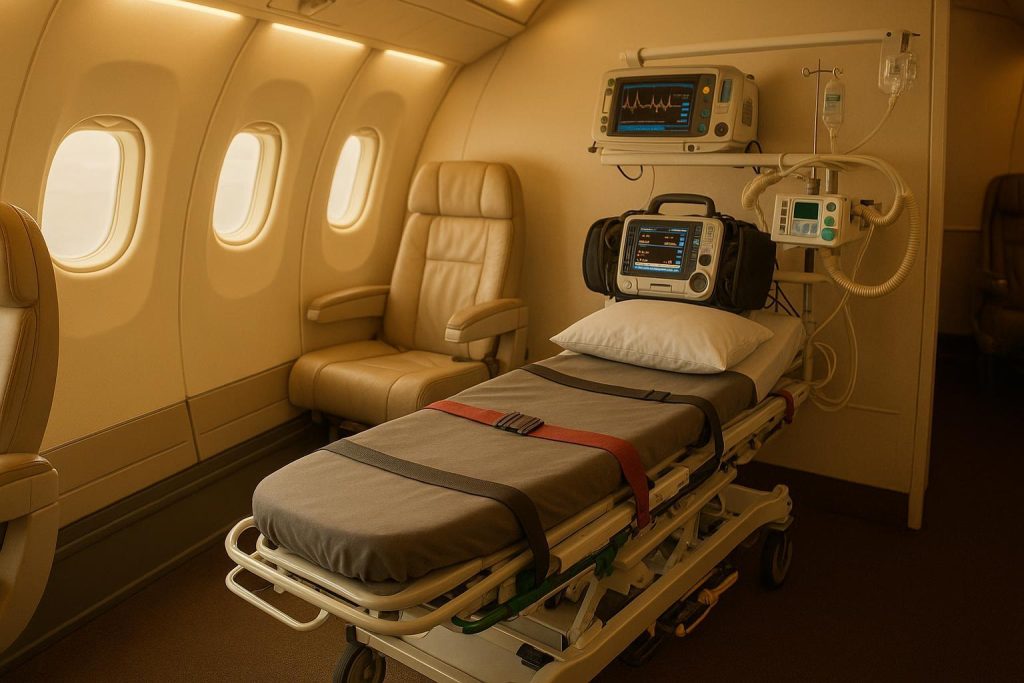
Understanding Your Options for Medical Air Travel: Airline Stretcher vs. Advanced Life Support
Transporting a loved one or patient across significant distances can be stressful, particularly when medical needs enter the equation. One of the most common considerations is whether to rely on a commercial airline stretcher set-up or secure a more specialized arrangement. That choice often comes down to the intensity and complexity of required care. In this detailed guide, we’ll explore what a commercial airline stretcher set-up entails, what advanced life support involves, and how to make the safest, most cost-effective decision for your unique situation.
What Is a Commercial Airline Stretcher Set-Up?
A commercial airline stretcher set-up is typically offered on select long-haul or international flights for patients who cannot sit upright throughout the journey. This arrangement involves removing a block of seats on the aircraft and installing a stretcher berth in their place. Airlines may erect curtains to ensure privacy, and airline staff will usually coordinate with medical professionals to help the passenger remain comfortable. However, rather than offering broad or intensive medical interventions, these strecher installations generally accommodate stable or moderately stable health conditions.
The patient then remains lying down for the entire flight, monitored by a medical escort if necessary. In many cases, the arrangement provides an efficient and relatively affordable alternative to a dedicated air ambulance. Still, it is essential to discuss your needs thoroughly with healthcare providers and air travel specialists to ensure that the airline stretcher option is genuinely suitable for the patient’s clinical status.
For additional details, consider learning more about the specifics of this service by visiting the Commercial Airline Stretcher page. Understanding the full scope of what you can expect from an airline stretcher is critical to making an informed decision.
The Importance of Assessing the Patient’s Condition
Before finalizing a medical travel plan, it is crucial to undergo a thorough assessment of the patient’s condition. Any pre-existing conditions, potential complications, or need for specialized care must be clearly understood. Doctors or case managers often compile comprehensive medical reports to evaluate what kind of transport is safest. Key considerations include:
- Vital Signs: Are the patient’s blood pressure, heart rate, and respiratory status stable enough to handle the changes in cabin pressure, extended travel time, and potential turbulence?
- Pre-Existing Conditions: Does the patient have a cardiac condition, respiratory issue, or any infection risk that could require close monitoring?
- Mobility and Comfort: Is the patient able to move with assistance, or do they require full immobilization? Will they need special support to handle pain or discomfort?
- Medication and Equipment Needs: Are there multiple intravenous infusions, specialized medications, or advanced equipment (like a ventilator or suction device) that need to be administered en route?
- Mental Health: Is the patient experiencing significant anxiety, confusion, or other psychological challenges that could complicate a commercial flight? If so, specialized mental health travel support might be necessary.
Once a complete assessment is done, you can determine whether a commercial airline stretcher is sufficient or if advanced life support measures are required. Sometimes, a borderline scenario arises—patients may require moderate monitoring but do not meet the threshold for a high-acuity transfer. In such cases, solutions like Commercial Medical Escort or Mental Health Travel Support may add the needed safety without the complexity or expense of full advanced life support.
Understanding Advanced Life Support Requirements
Advanced life support (ALS) refers to a more robust level of medical care and includes interventions beyond basic first aid, oxygen, or vital sign monitoring. Patients who require ALS may have conditions such as severe cardiac issues, respiratory failure, head trauma, or the need for continuous IV medication that cannot safely be paused during flight. In many cases, ALS involves access to:
- Ventilators and Airway Management: If the patient cannot breathe independently or needs specialized ventilation settings, advanced life support capability is essential.
- Critical Care Medications: Certain drugs must be administered continuously through multiple IV lines, and healthcare professionals must be trained to manage them mid-flight.
- Defibrillator and Cardiac Monitoring: For those at risk of cardiac arrest or unstable heart rhythms, on-board advanced cardiac life support is often a non-negotiable requirement.
- Blood Transfusion Options: While uncommon in routine transfers, some critical patients may require the option to receive blood products during long-haul flights.
An airline stretcher set-up on a standard commercial flight usually does not allow for all these advanced interventions. The cabin environment and typical airline policies might not accommodate the bulky equipment and extra personnel that patients in critical condition require. Consequently, an air ambulance or highly specialized transport solution tends to be recommended for these scenarios.
When Is a Commercial Airline Stretcher Sufficient?
The commercial airline stretcher option typically works well under the following conditions:
- Stable Vital Signs: The patient may need to lie down for the duration of the flight but does not require interventions beyond basic oxygen administration or routine monitoring.
- No High-Risk Diagnoses: The patient may have recently had surgery or an injury but does not have life-threatening conditions that are likely to worsen mid-flight.
- Limited Equipment Needs: The patient may require minimal medical equipment, such as a portable oxygen concentrator, basic IV fluids, or monitors, rather than advanced devices like ventilators.
- Medical Escort Available: Families often feel more comfortable with a trained nurse or paramedic on hand, but they do not require a full crew to handle advanced interventions. Visit the Commercial Medical Escort page if you believe this level of support might be enough.
For many individuals, these conditions align perfectly, making a commercial airline stretcher not only sufficient but also cost-effective and efficient. However, if you suspect your loved one needs continuous advanced medications, a ventilator, or other forms of critical care, you will want to explore more specialized alternatives.
What If Advanced Life Support Is Essential?
Any patient who requires full advanced life support during transport is generally advised to use a dedicated air ambulance or an equivalent specialized arrangement. An air ambulance is generally staffed with a flight physician, critical care nurses, or paramedics experienced in high-level care. In addition, the aircraft is custom-fitted with the needed oxygen supply, monitors, ventilators, and other emergency equipment. For some, these added capabilities are indispensable for ensuring safe travels, especially when risking a serious complication mid-flight is not an option.
Opting for an air ambulance or specialized medical jet does involve a higher cost. However, in cases where life-threatening circumstances could arise from insufficient monitoring and intervention capabilities, it is unquestionably the safer choice. If you have questions about the best solution for your loved one’s unique needs, you may want to explore Medical Repatriation services from reputable providers.
Ensuring Seamless Coordination With Healthcare Providers
Medical travel plans often require collaboration between the patient’s current healthcare team, a receiving hospital or care facility, and the transport providers. Effective communication ensures all parties are aligned on the patient’s condition and any unique requirements. Here are some steps to consider for seamless coordination:
- Gather All Medical Records: Hospital discharge summaries, imaging results, and medication lists help the transport team provide safe and continuous care.
- Discuss Travel Timelines: Ensure that the transport date aligns with any recommended waiting periods after a surgery or hospitalization. If the patient needs time to stabilize further, adjusting travel dates can reduce risk.
- Avoid Unnecessary Surprises: Inform the airline or medevac provider about any special equipment or medication well in advance.
- Finalize a Care Plan: Work with a trusted case manager or discharge coordinator who can liaise among your medical providers, airline staff, and travel facilitators. For comprehensive planning, consider Case Management services designed to handle all these logistics.
By addressing these tasks early, you help ensure a safer, smoother transport experience—whether you opt for a commercial airline stretcher or advanced life support with an air ambulance.
Cost Considerations and Comparisons
Cost is a common worry for families comparing commercial airline stretcher services and more advanced solutions. Generally speaking, a commercial stretcher arrangement is more budget-friendly because it uses an existing commercial flight. The airline charges a fee to reconfigure part of the cabin, remove seats, and coordinate with ground staff to accommodate medical equipment. This fee is typically lower than booking a private, fully equipped air ambulance.
However, in situations where advanced life support is essential, the additional costs for a specialized aircraft and medical team can be justified by significantly reducing stress and clinical risk. Settling for an ill-suited travel option can lead to complications, hospitalization, and potentially higher long-term expenses. In the end, striking the right balance between cost and clinical appropriateness is key.
How Jet Companion Helps You Choose the Right Option
At Jet Companion, we understand that each patient is unique, and what works well for one may be inadequate for another. The decision between an airline stretcher and advanced life support is never taken lightly. We believe in:
- Personalized Assessments: Our team reviews each patient’s medical history, the level of care needed, and the family’s concerns.
- Transparent Communication: We are committed to explaining every option in detail so that families and healthcare providers can make educated decisions.
- Collaboration: We see medical transport as a partnership among professionals and families, ensuring every member of the care team is on the same page.
- Comprehensive Services: For more complex needs, we also offer Commercial Airline Stretcher, Commercial Medical Escort, Medical Repatriation, and Case Management services that help address issues beyond just the flight itself.
If you need compassionate and professional medical transport, contact us today. Our team will guide you through each step—from planning and coordination to bedside-to-bedside transport. We believe in a stress-free and dignified travel experience for every patient.
Frequently Asked Questions About Airline Stretchers and ALS
1. Doesn’t a standard commercial flight come with medical staff?
Commercial flights often have flight attendants trained in basic first aid, but they are not equipped for advanced life support. A specialized medical escort or full ALS setup is necessary for patients with significant care requirements.
2. How do I know if an airline stretcher is appropriate for mental health conditions?
Mental health conditions vary widely in severity and support needs. If the patient is stable but requires assistance with anxiety, depression, or other similar challenges, consider Mental Health Travel Support. Patients at risk of severe psychiatric emergencies may need specialized escorts or more advanced support.
3. Can I use a commercial airline stretcher for international flights?
Yes, many international carriers do offer stretcher installations. However, policies and costs vary. Coordination and pre-flight clearance are essential, and not all airlines or routes provide this service.
4. How far in advance must I book?
It’s advisable to book as early as possible, ideally several weeks in advance, especially if you need seat reconfiguration or specialized equipment. The greater the complexity, the more lead time you should allow.
5. Will my insurance cover a commercial airline stretcher?
Insurance coverage can be complex and depends on individual policies and the medical necessity of the service. Some policies may cover part of the cost, while others might only cover ground transport or partial expenses. Verify details with your insurance provider or speak to a case manager for guidance.
Conclusion
When it comes to traveling with a patient who needs medical attention, the difference between a commercial airline stretcher set-up and advanced life support is significant. The stretcher option can be a cost-effective and relatively straightforward solution for stable patients who still need to fly lying down. However, if a condition requires interventions like ventilator support or continuous IV infusions, a more specialized service—often in the form of an air ambulance—becomes necessary.
Ultimately, the goal is to create a travel experience that prioritizes the patient’s comfort, well-being, and dignity while respecting financial realities. Through careful assessment, collaboration, and transparent planning, you can find the option that truly meets your loved one’s needs. If in doubt, consult with qualified healthcare professionals, engage experienced medical transport providers, and gather all the information you can. That way, you’ll be able to make an informed decision that offers the highest level of confidence and peace of mind.